You Gotta Taste This: My Singapore Food Adventure Unfolds
Walking through Singapore’s streets, I was hit by a wave of sizzling spices, sweet coconut, and smoky char—food isn’t just eaten here, it’s lived. From hawker centers buzzing like morning markets to midnight noodle runs, every bite tells a story. I didn’t just check in—I dove in. This is more than a trip; it’s a full sensory immersion into a culture where food binds people, memories, and identity. Let me take you where flavor rules.
First Bite, Lasting Impression
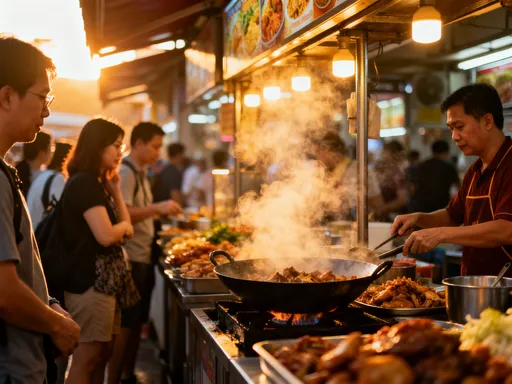
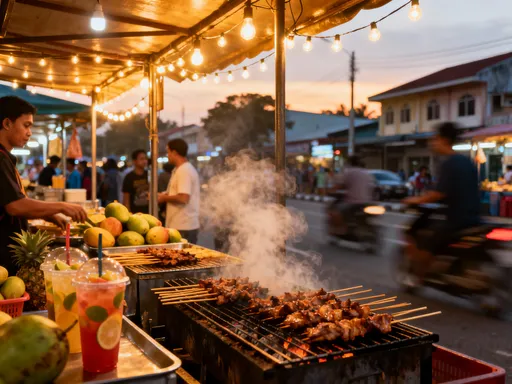
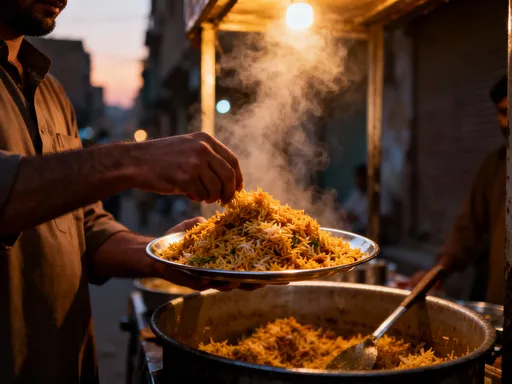
The moment I stepped out of Changi Airport and into the warm, humid night, my senses were already at attention. The air carried a rich blend of toasted garlic, caramelized shallots, and the faint tang of fermented shrimp paste. Within an hour of landing, I found myself at a modest hawker center near my hotel, surrounded by steam rising from metal trays and the rhythmic clatter of woks against flame. My first bite was a plate of char kway teow—wide flat noodles stir-fried over high heat with egg, cockles, bean sprouts, and a generous hand of dark soy sauce. It was messy, smoky, and utterly perfect.
This immediate plunge into street food wasn’t accidental—it was essential. In Singapore, food is the first language of connection. Hawker centers, often tucked beneath public housing blocks or nestled in neighborhood corners, are not tourist attractions but vital parts of daily life. Recognized by UNESCO in 2020 as Intangible Cultural Heritage, these open-air dining complexes represent more than just affordable meals—they embody community, tradition, and resilience. The act of queuing for a favorite stall, sharing tables with strangers, and eating with urgency before the food cools is part of the ritual.
What struck me most was the inclusivity of it all. Men in office shirts stood beside construction workers, students compared notes on their orders, and elderly couples moved slowly but deliberately between counters. No one was dressed for fine dining, yet everyone was treated like a connoisseur. This is where authenticity begins—not behind velvet ropes, but under fluorescent lights and ceiling fans spinning against the tropical heat.
Why Singapore’s Food Scene Stands Apart
Singapore’s culinary identity cannot be reduced to a single cuisine, and that is precisely what makes it extraordinary. Its food culture is a living testament to centuries of migration, trade, and coexistence among Malay, Chinese, Indian, and Peranakan communities. Each group brought its own flavors, techniques, and traditions, which over time blended into something uniquely Singaporean—neither purely authentic nor entirely fusion, but deeply rooted in place and history.
Take Hainanese chicken rice, often hailed as the nation’s unofficial national dish. It may have originated from southern China, but in Singapore, it has been refined into an art form—tender poached chicken served with fragrant rice cooked in chicken broth and garlic, accompanied by chili sauce, ginger paste, and dark soy. The simplicity belies the precision: every element must be balanced, every texture considered. Then there’s laksa, a coconut-based noodle soup that varies from region to region—here, the Katong version features thick rice noodles cut short for easy eating, swimming in a spicy, creamy broth layered with shrimp paste and turmeric.
Roti prata, a flaky flatbread of Indian origin, is another example of culinary evolution. Cooked on a hot griddle and often served with curry dipping sauce, it has become a breakfast staple for locals of all backgrounds. Some stalls now offer modern twists—cheese, egg, banana, even Nutella—but the original remains beloved for its crisp edges and soft, layered center. These dishes are not just meals; they are edible stories of adaptation and harmony.
What elevates Singapore’s food scene further is its accessibility. Unlike many global cities where exceptional dining comes with a steep price tag, here a Michelin-recognized meal can cost less than ten dollars. This democratization of quality is no accident. Decades of urban planning prioritized public housing and communal spaces, with hawker centers built into the fabric of neighborhoods. As a result, world-class food isn’t reserved for special occasions—it’s part of everyday life.
Hawker Centers: The Heartbeat of Daily Life
To understand Singapore, one must spend time in its hawker centers. These are not mere food courts—they are social ecosystems, humming with energy from early morning until late at night. Places like Maxwell Food Centre, Tiong Bahru Market, and Old Airport Road Food Centre are not just where people eat; they are where relationships are nurtured, news is exchanged, and routines are anchored.
At Tiong Bahru Market, I watched a grandmother guide her granddaughter through the morning ritual of choosing the day’s breakfast—kaya toast, soft-boiled eggs, and coffee served in a small metal mug. At Maxwell, office workers balanced laptops and lunch trays, squeezing in a quick meal before returning to desks. Even at 9 p.m., Newton Food Centre buzzed with families celebrating birthdays over barbecued seafood and cold beers. There was no pretense, only purpose: to feed the body and nourish the soul.
The layout of these centers is both practical and democratic. Stalls line the perimeter, each specializing in one or two dishes perfected over decades. A central seating area encourages communal dining, with shared tables fostering accidental conversations. Despite the crowds, cleanliness is meticulously maintained—floors are mopped regularly, trash bins are emptied promptly, and hygiene ratings are visibly posted. This balance of efficiency and care reflects a broader national value: order with warmth.
Perhaps most telling is how integral these spaces are to intergenerational connection. Recipes are passed down not in cookbooks but through daily practice—children learn by watching parents haggle with wet market vendors, by helping fold dumplings, by memorizing the exact way their uncle stirs the curry. In this way, hawker centers do more than serve food—they preserve memory.
From Street Stalls to Michelin Recognition
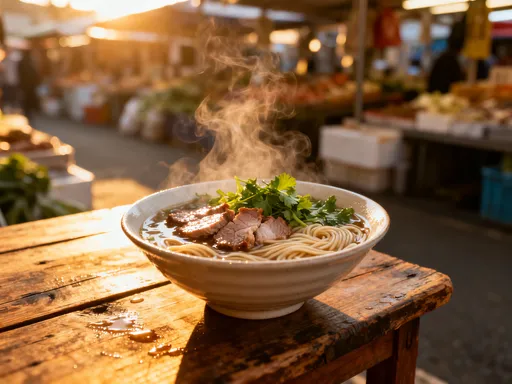
In 2016, the culinary world took notice when Singapore launched its first Michelin Guide—and to many people’s surprise, two street food vendors received stars. One was Hill Street Tai Hwa Pork Noodle, known for its bak chor mee, a bowl of springy noodles topped with minced pork, pork liver, meatballs, and a tangy vinegar-based sauce. The other was Liao Fan Hong Kong Soya Sauce Chicken Rice, a humble stall serving tender chicken bathed in a glossy, aromatic soy sauce reduction.
The recognition was groundbreaking. For the first time, the highest honor in fine dining was awarded not to white-tablecloth establishments but to open-air stalls operating out of food courts. It challenged long-held assumptions about what constitutes “fine” cuisine and elevated the status of hawker culture on the global stage. Locals responded with pride—this was validation that their everyday meals mattered.
Yet, with fame came challenges. Liao Fan’s sudden popularity led to hours-long queues and concerns about authenticity. Some feared commercialization would dilute the very essence of hawker food—its simplicity, affordability, and personal touch. Others worried younger generations might lose interest if the work was no longer sustainable or respected.
Still, the broader impact has been positive. The Michelin recognition sparked renewed investment in hawker training programs, preservation efforts, and even government subsidies to help aging vendors pass on their businesses. It also inspired a new wave of appreciation among younger Singaporeans, who began documenting family recipes and exploring lesser-known stalls. The message was clear: excellence doesn’t require luxury. It requires dedication, consistency, and heart.
Must-Try Dishes and Where to Find Them
No visit to Singapore is complete without tasting its iconic dishes. Each offers a window into the city’s multicultural soul, blending ingredients and techniques in ways that feel both familiar and surprising.
Chili crab, often cited as Singapore’s most famous dish, is a celebration of abundance. Fresh mud crab is stir-fried in a thick, sweet-spicy tomato and chili sauce, best enjoyed with mantou buns for soaking up every drop. While many restaurants serve it, the most authentic versions often come from seaside seafood spots in East Coast or Sentosa, where crabs are sourced daily.
Kaya toast, a breakfast staple, represents the Peranakan influence—Malay-Chinese heritage that blends cultures in both food and lifestyle. Two slices of toasted bread are spread with kaya, a rich coconut and egg jam, and cold butter. Paired with soft-boiled eggs seasoned with soy and white pepper, and a cup of kopi (local coffee), it’s a humble meal with deep comfort.
Ice kacang, a towering shaved ice dessert, is pure tropical joy. Layers of syrup-drenched jelly, sweet corn, red beans, and attap chee (palm fruit) are topped with evaporated milk and gula melaka (palm sugar). Found in hawker centers and dessert stalls alike, it’s the perfect antidote to Singapore’s heat.
Nasi lemak, considered by many as Malaysia’s national dish but equally cherished in Singapore, is a fragrant plate of coconut rice served with fried anchovies, peanuts, sliced cucumber, hard-boiled egg, and sambal. Some versions include fried chicken or rendang. Best eaten in the morning, it’s a hearty start to the day, widely available in neighborhood markets.
For those seeking authenticity, the key is to follow the locals. Look for stalls with long queues—especially during meal hours. Busy lines usually mean fresh turnover and consistent quality. Avoid places that rely heavily on English menus for tourists; the best spots often have minimal signage, written in Chinese, Malay, or Tamil. And while mobile payments are increasingly accepted, always carry cash—many beloved vendors still operate on a cash-only basis.
Beyond the Plate: Food as Cultural Connection
Food in Singapore is never just about sustenance. It is memory, identity, and continuity. During my stay, I visited a wet market in Geylang Serai, where vendors displayed pyramids of turmeric roots, bundles of lemongrass, and live crabs clicking their claws in tanks. An elderly woman selling homemade rempah (spice paste) shared how her mother taught her to grind ingredients with a stone mortar—“not too fine, not too coarse, just right for the pot.”
These moments revealed a deeper truth: cooking here is an act of love and preservation. Recipes are rarely written down; they are demonstrated, tasted, adjusted. A grandmother might say, “Add a little more sugar, like when your father was born,” anchoring flavor to family history. Festivals like Hari Raya, Chinese New Year, and Deepavali are defined by food—open houses where neighbors of all backgrounds are welcomed with trays of curry puffs, pineapple tarts, and murukku.
I joined a small cooking session in a community kitchen, where participants learned to make laksa from scratch. No formal instructor, just a retiree named Aunty Lim who had been making it for 40 years. As we pounded dried chilies and toasted coriander seeds, she reminded us, “Good food takes time. No shortcuts. Like raising children.” The room filled with laughter, steam, and the deep aroma of coconut milk simmering with spices. We ate together afterward, not as strangers, but as part of a shared moment.
This is the invisible thread that runs through Singapore’s food culture—it connects generations, bridges communities, and turns meals into moments of belonging. To eat here is not just to consume, but to participate.
Practical Tips for a Flavor-Filled Journey
For travelers eager to dive into Singapore’s food scene, a few practical tips can make all the difference. First, timing matters. Hawker centers are busiest during peak hours—7–9 a.m. for breakfast, 12–2 p.m. for lunch, and 6–8 p.m. for dinner. To avoid long waits, consider arriving just before or after these windows. Some stalls sell out early, especially popular ones, so plan accordingly.
Look for signs of quality. A busy stall with a queue of locals is usually a good bet. Watch how the vendor handles ingredients—clean hands, organized workspace, and consistent cooking methods are indicators of care. Hygiene ratings, displayed at every stall, range from A to D, with A being the highest. Aim for A or B.
Payment methods are evolving. While older vendors may only accept cash, many now use QR codes for mobile payments like PayNow or GrabPay. It’s wise to carry a mix of both. Also, bring small bills—large notes can be awkward at small stalls.
Dietary needs are increasingly accommodated. Many stalls now label halal status clearly, and vegetarian options are available, especially in Indian and Chinese vegetarian eateries. For those with allergies, translation apps can help communicate concerns, though English is widely spoken.
Staying hydrated is essential. The tropical climate means high humidity and constant sweating. Bottled water is readily available, but local drinks like bandung (rose syrup and milk), lime juice with soda, or fresh coconut water offer refreshing alternatives. Avoid drinking tap water, though it is safe—most prefer filtered or bottled.
Getting around is easy thanks to Singapore’s efficient MRT system. Food-rich neighborhoods like Katong, Geylang, and Chinatown are all accessible by train. From there, a short walk or bus ride leads to hidden gems. Use apps like Google Maps or the official OneMap SG to locate hawker centers and check opening hours.
Finally, respect the culture. Queues are sacred—never cut in line. Use the token system if available. After eating, return your tray and dispose of trash properly—this helps keep the centers clean and functional for everyone. A simple “thank you” in English or a local language goes a long way.
Singapore’s food culture is not just about satisfying hunger—it’s a living archive of history, identity, and connection. Every meal offers a chance to understand the city’s soul, one bite at a time. As you plan your visit, don’t just check in—taste deeply, listen closely, and let the flavors guide your journey. The real Singapore waits on a plate.