Lost in the Marble Lanes of Udaipur
Have you ever wandered through a city that feels like a living museum? Udaipur, carved in white marble and kissed by lakefront breezes, is exactly that. As I strolled its narrow alleys and grand courtyards, I was struck by how every archway, jharokha, and domed rooftop told a story of Rajput grandeur. This isn’t just architecture—it’s poetry in stone. Nestled in the Aravalli Hills of Rajasthan, Udaipur unfolds like a dream painted in soft saffron, cool white, and shimmering blue. More than a tourist destination, it offers a rare harmony between nature, history, and human craftsmanship. For women who seek beauty with meaning, who appreciate quiet moments of reflection amid timeless surroundings, Udaipur is not just a place to visit—it’s a place to remember, to feel, and to return to in spirit again and again.
The First Glimpse: Arriving in the City of Lakes
As travelers approach Udaipur by road or rail, the landscape shifts gently from the rugged aridity typical of much of Rajasthan to a more temperate, almost Mediterranean serenity. Rolling green hills frame the city, cradling a series of interconnected lakes that give Udaipur its poetic nickname: the City of Lakes. Lake Pichola, the most famous of these, reflects the skyline like a mirror, capturing the silhouettes of palaces, temples, and stepped ghats that line its shores. This first view—often caught from the crest of a hill on the southern approach—is not merely scenic; it is emotionally resonant. There is a stillness here, a sense of breath held, that distinguishes Udaipur from the more frenetic energy of Jaipur or Jodhpur.
The city’s geography has played a crucial role in shaping its character. Built on the banks of Lake Pichola in the 16th century by Maharana Udai Singh II, Udaipur was designed as both a defensive stronghold and a spiritual retreat. Unlike the hilltop forts of other Rajput kingdoms, which were elevated for surveillance and protection, Udaipur was nestled within the valley, its palaces rising along the water’s edge. This choice created a more intimate relationship between architecture and environment. The lakes serve not only as aesthetic features but as functional elements—historically used for water supply, irrigation, and climate regulation. Even today, the breeze off the water cools the marble walkways, offering relief from the Rajasthani sun.
Arriving at the ghats near Gangaur Ghat or Ambrai Ghat at sunset, one witnesses the city in its most theatrical light. The golden glow bathes the facades of the City Palace complex, turning white stone into warm cream, while boats glide silently across the water. It is here that the emotional impact of Udaipur becomes undeniable. For the discerning traveler—particularly women who value atmosphere over spectacle—this moment is not about photographing monuments, but about absorbing a mood. The city does not shout; it whispers. And in that whisper lies its power to transform a simple visit into a deeply personal experience.
City Palace: A Labyrinth of Royal Heritage
Stretching nearly a kilometer along the eastern shore of Lake Pichola, the City Palace is not a single building but a sprawling ensemble of courtyards, terraces, halls, and domes accumulated over four centuries. Constructed incrementally by successive rulers of the Mewar dynasty, the palace reflects a layered architectural narrative—one that blends Rajput valor, Mughal refinement, and even European influences introduced during the colonial period. Its scale is impressive, but what truly captivates is the intimacy of its details. Every corridor, balcony, and jharokha window seems designed not only for grandeur but for contemplation.
Visitors enter through the main gate, Badi Pol, where carved stone elephants stand guard. Beyond lies a sequence of open courtyards, each with its own character. Mor Chowk, the Peacock Courtyard, is one of the most celebrated spaces. Here, the walls are inlaid with thousands of colored glass tiles arranged into mosaic peacocks—symbols of royalty and beauty in Indian tradition. The craftsmanship is extraordinary, with each feather meticulously placed to catch the shifting light. During festivals like Diwali, when oil lamps illuminate the courtyard from within, the effect is nothing short of magical, transforming the space into a glowing jewel box.
Another highlight is the Sheesh Mahal, or Mirror Palace, where walls and ceilings are adorned with tiny mirrored fragments set into intricate plasterwork. When candlelight dances across the surface, the room appears to shimmer like a starlit sky. This was once a private chamber for the royal family, designed for quiet evenings of music and poetry. Such spaces reveal that the palace was not merely a seat of power but a lived-in home, shaped by aesthetic sensibility and emotional warmth.
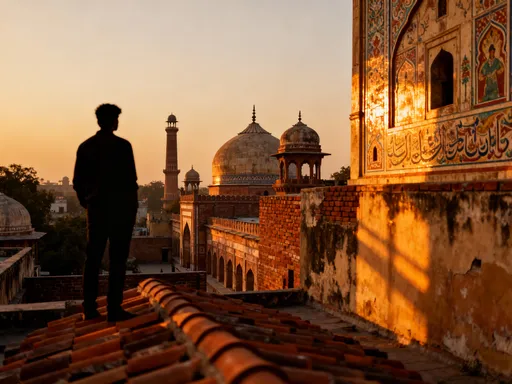
One of the most rewarding experiences is ascending to the rooftop terraces, where panoramic views unfold across the lake to the distant hills. From this vantage point, the city reveals itself as a harmonious composition—domes nestled beside tree-lined lanes, boats tracing quiet paths on the water, and the distant silhouette of Jag Mandir on its island. The palace invites wandering, rewarding those who take their time with hidden staircases, forgotten alcoves, and unexpected vistas. For women who appreciate history not as a list of dates but as a living presence, the City Palace offers a rare opportunity to walk through time.
Havelis and Hidden Courtyards: The Soul of the Old City
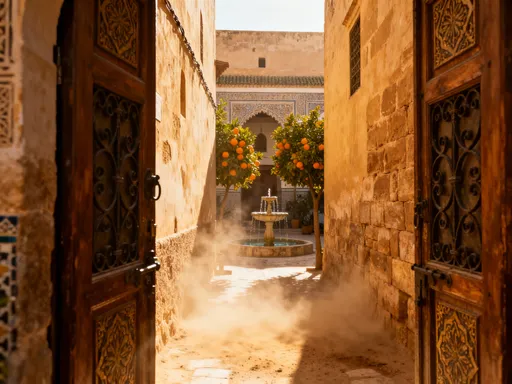
Beyond the grandeur of royal architecture, Udaipur’s true soul lies in its old residential neighborhoods, where centuries-old havelis line narrow, winding lanes. These traditional homes, built by wealthy merchants, court officials, and artisans, reflect a quieter but equally refined aesthetic. Unlike the monumental scale of the palace, havelis were designed for family life, with central courtyards that allowed light and air to circulate while preserving privacy—a vital consideration in Rajput society.
The facades of these homes are often adorned with delicate stone carvings—floral patterns, geometric motifs, and scenes from mythology—etched into sandstone and marble. Overhanging jharokhas, or enclosed balconies, project from upper floors, offering shaded vantage points from which women of the household could observe street life without being seen. These architectural features speak to a culture that valued both beauty and discretion, where elegance was woven into the rhythms of daily life.
While many havelis remain private residences, a growing number have been sensitively restored and repurposed as boutique hotels, art galleries, and heritage cafes. Staying in one of these converted homes offers a uniquely intimate way to experience the city. Imagine waking to the sound of temple bells, stepping onto a private courtyard where morning sunlight filters through carved stone screens, and sipping chai served on a hand-painted tray. These spaces retain the warmth of domestic life, allowing guests to feel not like tourists, but temporary members of a storied household.
Walking through areas like Gangaur Bazaar or Sardar Chowk, one encounters the human scale of Udaipur. Shopkeepers greet passersby with quiet courtesy, children play near ornate doorways, and the scent of marigolds and incense drifts from nearby temples. This is not a city preserved behind glass; it is alive, evolving, yet deeply respectful of its past. For women who seek authenticity in travel—places that feel real, not staged—these neighborhoods offer a profound sense of connection.
Lakefront Temples and Island Retreats
The lakes of Udaipur are more than scenic backdrops—they are sacred spaces, spiritual anchors, and architectural canvases. Among the most significant religious structures is the Jagdish Temple, located just outside the City Palace complex. Built in 1651 by Maharana Jagat Singh I, this Hindu temple is dedicated to Lord Vishnu and exemplifies the Nagara style of North Indian temple architecture. Its towering shikhara (spire) rises in a series of concentric tiers, crowned with a brass banner. The exterior is richly carved with deities, celestial beings, and floral motifs, each stone telling a story from Hindu cosmology.
What makes Jagdish Temple remarkable is not only its craftsmanship but its integration into daily life. Devotees arrive throughout the day to offer prayers, while priests chant mantras in resonant Sanskrit. The temple courtyard often fills with the fragrance of sandalwood and marigolds, and the rhythmic beat of temple drums adds to the sensory tapestry. For visitors, entering the temple is not just an act of observation but of participation in a living tradition. Women, in particular, may find resonance in the presence of feminine divine forms—such as Lakshmi, the goddess of prosperity, and Saraswati, the goddess of wisdom—honored in side shrines.
Equally captivating are the island palaces that float like dreams upon Lake Pichola. Jag Mandir, the larger of the two, was originally built as a pleasure retreat and sanctuary for Mughal princes during times of political unrest. Accessible only by boat, it offers a serene escape from the bustle of the mainland. The palace features arched corridors, domed kiosks, and open terraces where royalty once dined under the stars. Today, it houses a restaurant where guests can enjoy traditional Rajasthani thalis while gazing across the water to the illuminated City Palace.
Nearer to the shore lies the smaller but equally enchanting Gangaur Island, home to the Lakshmi Narayan Temple. This peaceful sanctuary, surrounded by water on all sides, is especially revered during the festival of Gangaur, when women gather to pray for the well-being of their families. The journey to these islands—by small wooden boat, often rowed by a local boatman—adds to their sense of seclusion and sanctity. For travelers seeking moments of stillness, these lakefront temples and retreats offer spaces of quiet reflection, where architecture and spirituality intertwine.
Colonial Echoes and Modern Adaptations
While Udaipur is celebrated for its historic architecture, the city also bears subtle traces of its more recent past. During the British colonial period, particularly in the late 19th and early 20th centuries, new administrative buildings, railway infrastructure, and residential quarters were introduced. These structures, though fewer in number, reflect a blend of European styles—such as Art Deco and Neoclassical—with local materials and climatic adaptations. Near the railway station and in the newer sectors like Ravi Chopar, one can spot buildings with arched verandas, geometric stucco work, and latticed ventilation panels that echo both colonial and regional design principles.
What is remarkable is how Udaipur has managed to integrate modern development without compromising its architectural identity. Unlike some rapidly urbanizing Indian cities, Udaipur enforces strict building regulations that require the use of local stone, traditional rooflines, and muted color palettes. New constructions, even contemporary hotels and shopping complexes, are designed to harmonize with the historic fabric rather than compete with it. This commitment to visual continuity ensures that the city retains its dreamlike quality, even as it grows.
In recent years, sustainable architecture has gained attention, with initiatives promoting rainwater harvesting, solar energy, and the restoration of traditional water systems like stepwells and tanks. Some boutique properties have adopted eco-conscious designs, using reclaimed wood, natural ventilation, and organic materials to minimize environmental impact. These efforts reflect a broader understanding that heritage is not just about preserving the past, but about building a future that honors it.
For the thoughtful traveler, this balance between tradition and progress is deeply reassuring. It suggests that Udaipur is not frozen in time, but thoughtfully evolving. Women who value stability, beauty, and continuity in their lives may find particular inspiration in how the city respects its roots while embracing change with grace.
Wandering as a Way of Seeing: The Art of Slow Exploration
The true essence of Udaipur cannot be captured through a checklist of must-see sights. It reveals itself in the quiet moments—the curve of a stone archway, the pattern of light on a courtyard wall, the sound of a sitar drifting from an open window. The most rewarding way to experience the city is through aimless walking, allowing curiosity to guide each turn. There are no grand revelations at every corner, but rather a gradual accumulation of impressions that, over time, form a deep emotional connection.
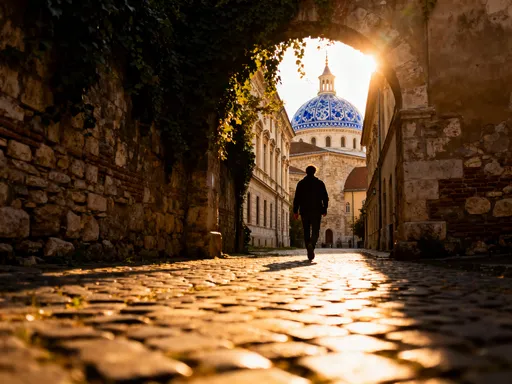
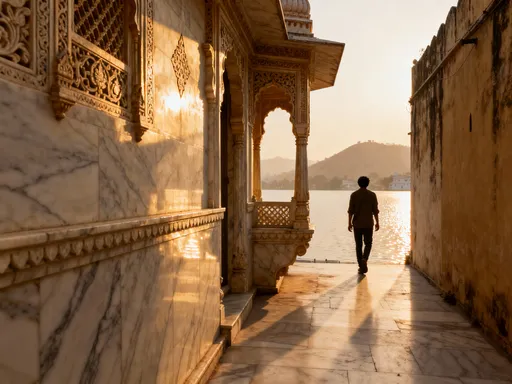
Morning is an especially magical time to explore. As the sun rises over the Aravalli Hills, it bathes the marble facades in soft gold, highlighting textures that remain invisible under harsh midday light. Shadows stretch long across cobblestone lanes, and the air carries the scent of fresh bread from neighborhood bakeries. Temple bells ring in the distance, and shopkeepers begin to open their stalls, arranging colorful textiles and handcrafted souvenirs. This is the hour when the city feels most intimate, most alive in its everyday rhythm.
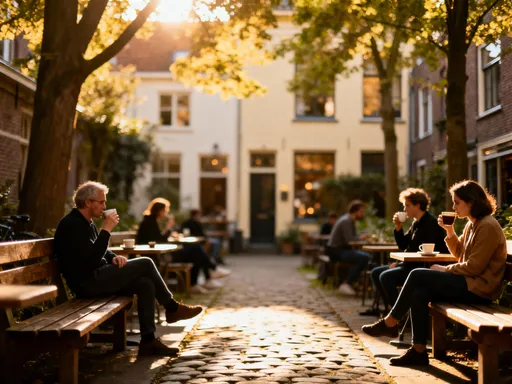
Evening offers a different kind of beauty. As twilight descends, the lakeside lights begin to flicker on, reflecting in the still water like stars. The City Palace, illuminated from within, glows like a lantern. Couples stroll along the ghats, children fly kites, and street vendors serve hot snacks wrapped in banana leaves. Sitting on a bench with a cup of masala chai, one can simply watch the world pass by—a timeless ritual that requires no translation.
Slow travel is not about doing less; it is about noticing more. It is about allowing a painted doorframe, a weathered statue, or a rooftop garden to become a moment of wonder. For women who often carry the weight of daily responsibilities, Udaipur offers a rare gift: the permission to pause, to wander without purpose, and to rediscover the joy of simply being.
Preservation and the Future of Heritage
Udaipur’s beauty is not guaranteed to last forever. Like many historic cities, it faces pressures from pollution, urban expansion, and the sheer volume of tourism. Lake Pichola, once pristine, has suffered from siltation and algal blooms due to runoff and inadequate waste management. Some older havelis show signs of structural decay, their intricate carvings eroded by time and neglect. The challenge is not only to restore what remains but to ensure that new development enhances rather than diminishes the city’s unique character.
Fortunately, conservation efforts are underway. Government bodies, such as the Archaeological Survey of India and the Udaipur Municipal Corporation, collaborate with heritage NGOs and local communities to restore historic buildings using traditional materials and techniques. Lime plaster, handmade bricks, and natural pigments are preferred over modern cement and synthetic paints, ensuring authenticity in every repair. Projects like the restoration of the City Palace’s rooftop pavilions and the rehabilitation of stepwells demonstrate a commitment to long-term preservation.
Equally important is the role of responsible tourism. Travelers can contribute by choosing heritage stays, supporting local artisans, and respecting sacred spaces. Simple actions—such as avoiding littering, refraining from touching delicate carvings, and dressing modestly at religious sites—help protect the dignity of the city’s cultural spaces. Women, often the primary planners of family travel, are in a powerful position to model mindful tourism, teaching children and companions alike the value of respect and stewardship.
The future of Udaipur depends on this shared responsibility. Its marble lanes are not just relics of the past; they are living pathways that connect generations. By preserving them with care, we ensure that future wanderers—mothers, daughters, sisters, friends—will continue to find inspiration in their quiet beauty. Udaipur is more than a destination; it is a legacy, waiting to be honored, one thoughtful step at a time.